Residential properties near riparian zones like Shelby Bottoms Greenway in East Nashville or mature hardwood tree lines in Green Hills face sustained high humidity that accelerates the life cycle of Culex mosquitoes .…
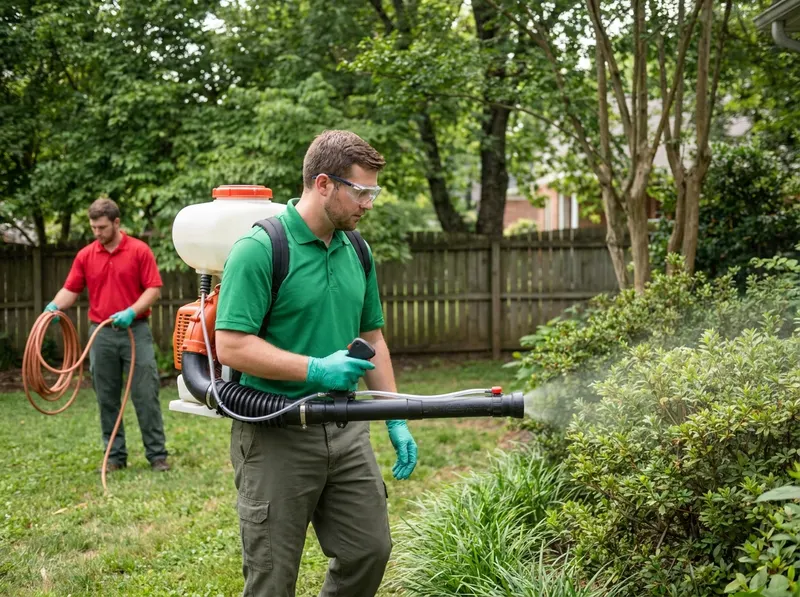
Residential properties near riparian zones like Shelby Bottoms Greenway in East Nashville or mature hardwood tree lines in Green Hills face sustained high humidity that accelerates the life cycle of Culex mosquitoes. Typical applications deposit micro-droplets of water-based microencapsulated solutions directly to the shaded undersides of broadleaf shrubs, groundcovers, and ivy beds where adult mosquitoes harbor during the heat of the day. Technicians adhere strictly to guidelines from the Environmental Protection Agency to ensure non-target species and active pollinator areas, such as vegetable gardens or blooming perennials, remain completely untreated. Properties bordering low-elevation drainage paths in Donelson or older stone foundations in Germantown also receive targeted placements of Bacillus thuringiensis israelensis to arrest aquatic larval development in drainage basins, catch basins, and unremovable standing ground water.
Treatment plans fit homeowners desiring uninterrupted outdoor living spaces across shaded yards in Sylvan Park, 12 South, and Belmont-Hillsboro without exposure to indiscriminate wide-area chemical fogging. For yards with heavy canopy shade, misting applications are repeated every 21 to 30 days throughout the warm season, aligned with precipitation cycles monitored by the National Weather Service Nashville office. The biological trade-off centers on treatment precision versus persistence: specialized botanical pyrethrins and targeted synthetic pyrethroids break down naturally in ultraviolet sunlight over 3 to 4 weeks, avoiding long-term bioaccumulation in soil while requiring regular maintenance visits between April and late October to sustain an effective knockdown barrier against disease vectors tracked by the Tennessee Department of Health.
Ground property evaluations in neighborhoods like The Nations, Inglewood, and Antioch identify structural retention problems, including shaded gutters, clogged downspout extensions, and heavy clay soil conditions common in Davidson County that hold unevaporated moisture. Addressing these localized biological reservoirs significantly reduces the overall application volume required. Every service protocol adheres to structural pest and vector management standards outlined by the National Pest Management Association and environmental standards governed by the Tennessee Department of Agriculture, protecting domestic pets and backyard ecosystems through low-drift mechanical nozzles calibrated to droplet sizes between 50 and 100 microns.
Every job gets a firm, written price after a free on-site visit.
For standards, safe disposal, and service guidance on pest control services in Nashville, TN, useful references include U.S. EPA, ENERGY STAR, U.S. Dept. of Energy, Consumer.gov, U.S. Census Bureau, and Google Maps. General consumer and small-business resources are available from USA.gov, Better Business Bureau, FTC Consumer Advice, U.S. Small Business Administration, and Ready.gov.
Tell us about your seasonal mosquito barrier application job in Nashville and we'll send a clear, written quote, usually the same day.
 SilverFern Bug Services